
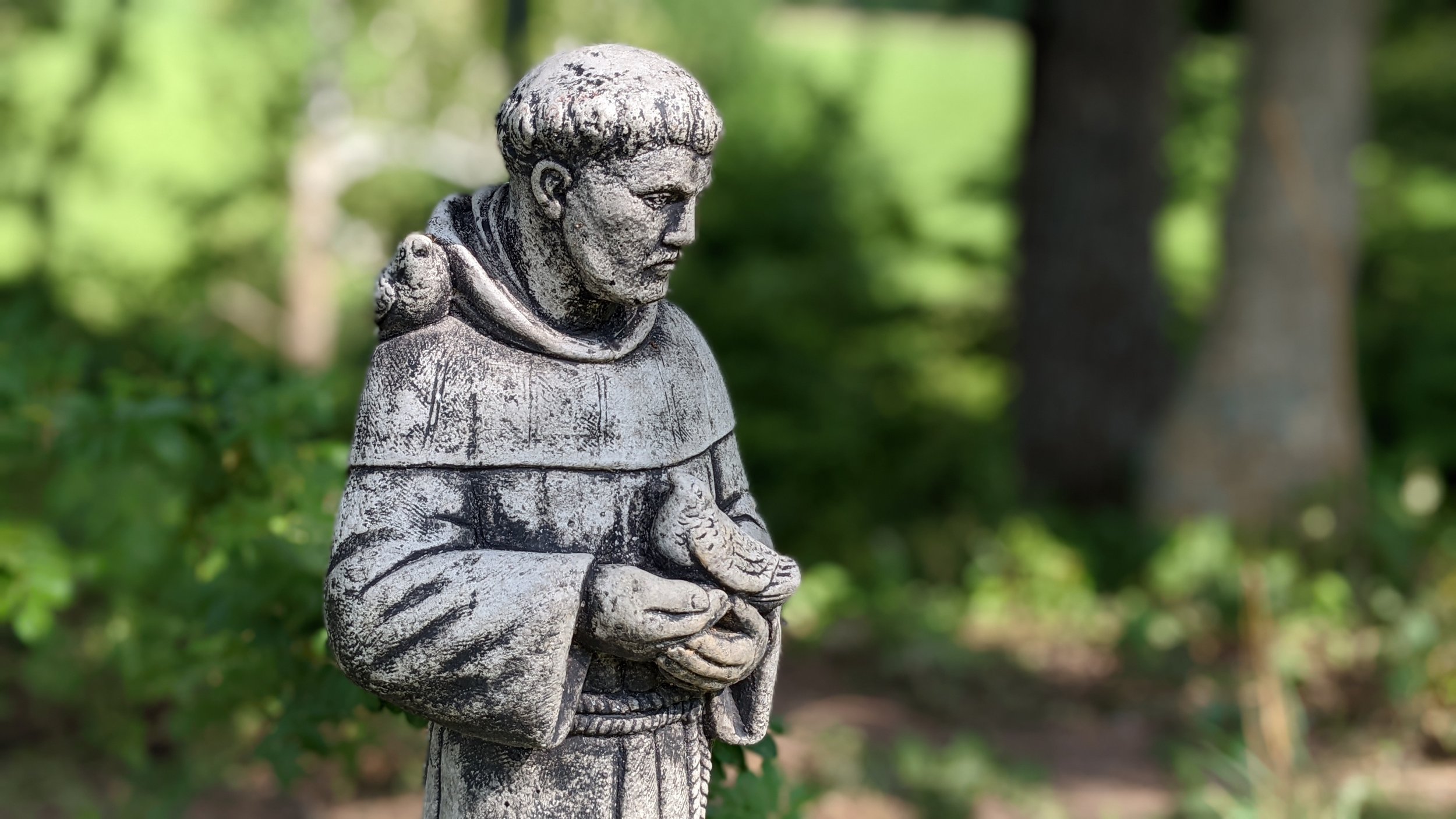
Rockingham Abbey
A parish work of recovery and renewal
Rockingham Abbey is where Church of the Lamb learns to embody what we believe: abiding in Christ through worship, work, rest, hospitality, and care for God’s creation.
As we work to preserve and restore this place, and God uses this place to preserve and restore us, the work of the Abbey is still emerging.
Gardens, bees, pasture, feasts, and guilds are beginning to take shape as works of prayer and provision — not as finished ventures, but as first fruits offered for the life of the parish, our guests, our neighbors, and generations to come.
Recovery & Renewal
Rockingham Abbey is not a reenactment of medieval monastic life.
It is a work of Christian recovery: a return to the deep sources of Scripture, Anglican worship, and the wisdom of older Christian communities so that ordinary parish life may be renewed in the present.
This kind of return is sometimes called ressourcement — not nostalgia, but going back to the living sources in order to move forward faithfully.
Here on thirty-one acres in the Shenandoah Valley, Church of the Lamb is recovering an abbey-shaped way of being: worship and work, prayer and rest, hospitality and stewardship, Word and Sacrament, land and neighbor held together in one common life.
And because Christians are people of resurrection, we receive these small beginnings as signs of hope: old patterns coming alive again, neglected gifts being restored, and the life of Christ taking root in ordinary places.
What do we mean by Abbey?
Historically, abbeys and monasteries were communities of Christians ordered around prayer, worship, work, hospitality, learning, and mercy. Their labor took many forms: growing food, tending animals, educating children, welcoming travelers, caring for the poor, preserving books, making goods, and sustaining a common life of prayer.
Church of the Lamb is not a monastic order. We are an Anglican parish church, with a Rector, clergy, Vestry, staff, families, children, volunteers, neighbors, and guests. But we believe the older abbey pattern still has something to teach the church: that worship and work belong together; that land can be received as gift; that beauty and hospitality matter; that prayer should shape ordinary life; and that Christian community is meant to become a blessing beyond itself.
So when we call this place Rockingham Abbey, we mean that we are recovering an abbey-shaped way of being a parish: ordered around Word and Sacrament, rooted in prayer, attentive to creation, hospitable to guests, and compelled by love.
This is not an attempt to recreate the past. It is a work of ressourcement and renewal, carried by resurrection hope: old Christian patterns received again with humility, prayer, and love, so that they may live in a new form for the sake of the world.
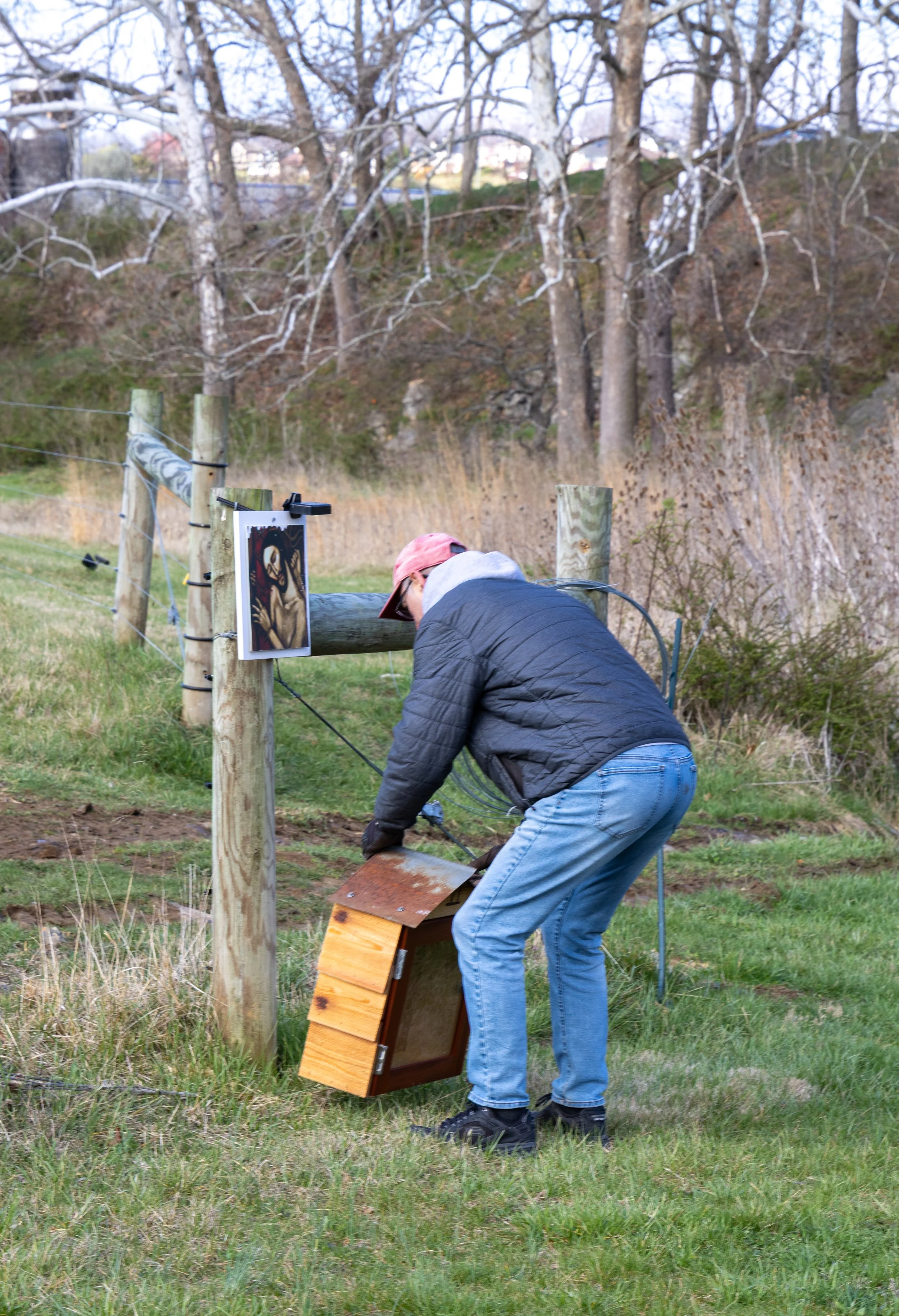
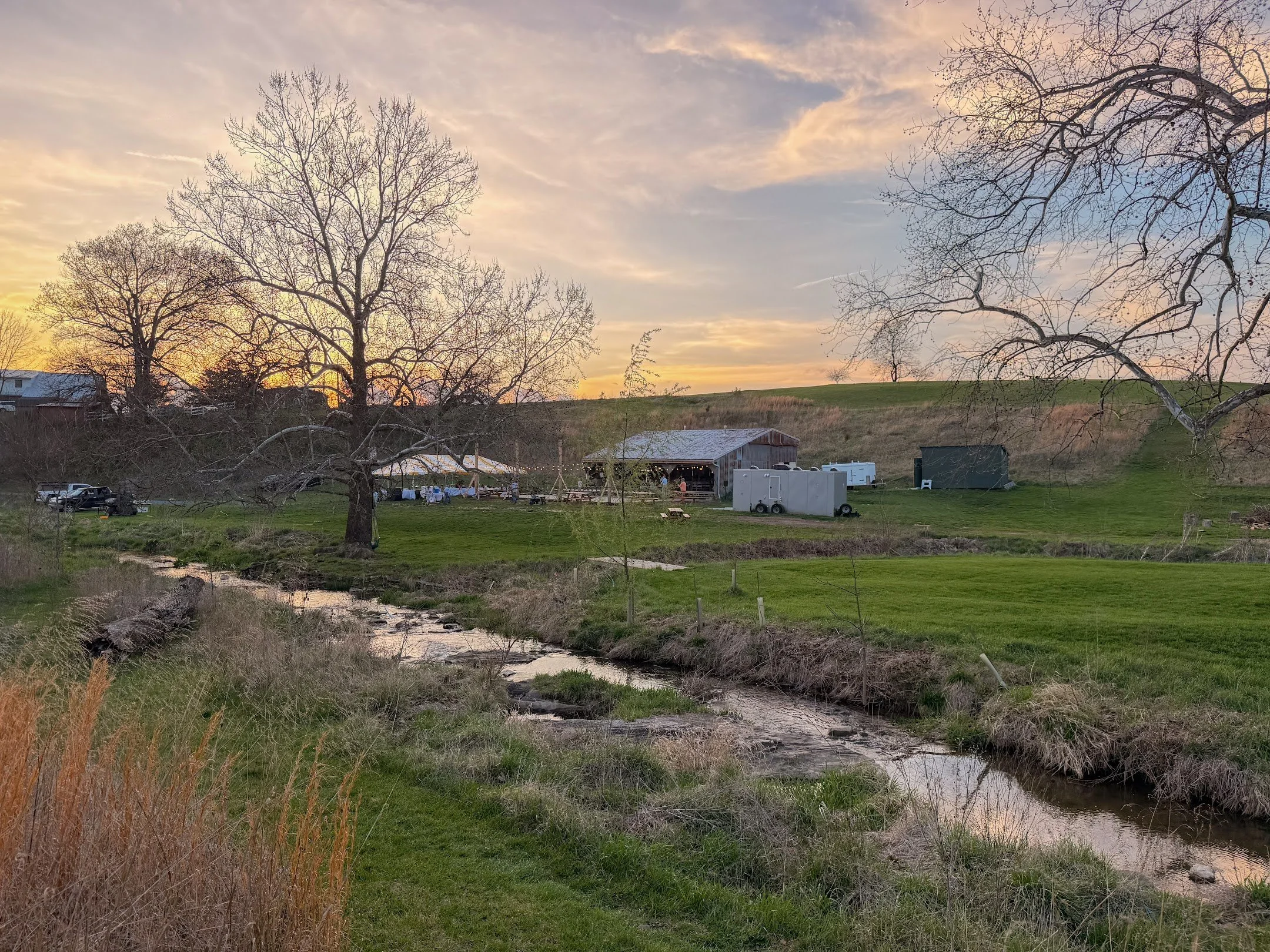
“Trust in the Lord, and do good; dwell in the land and feed on His faithfulness.”
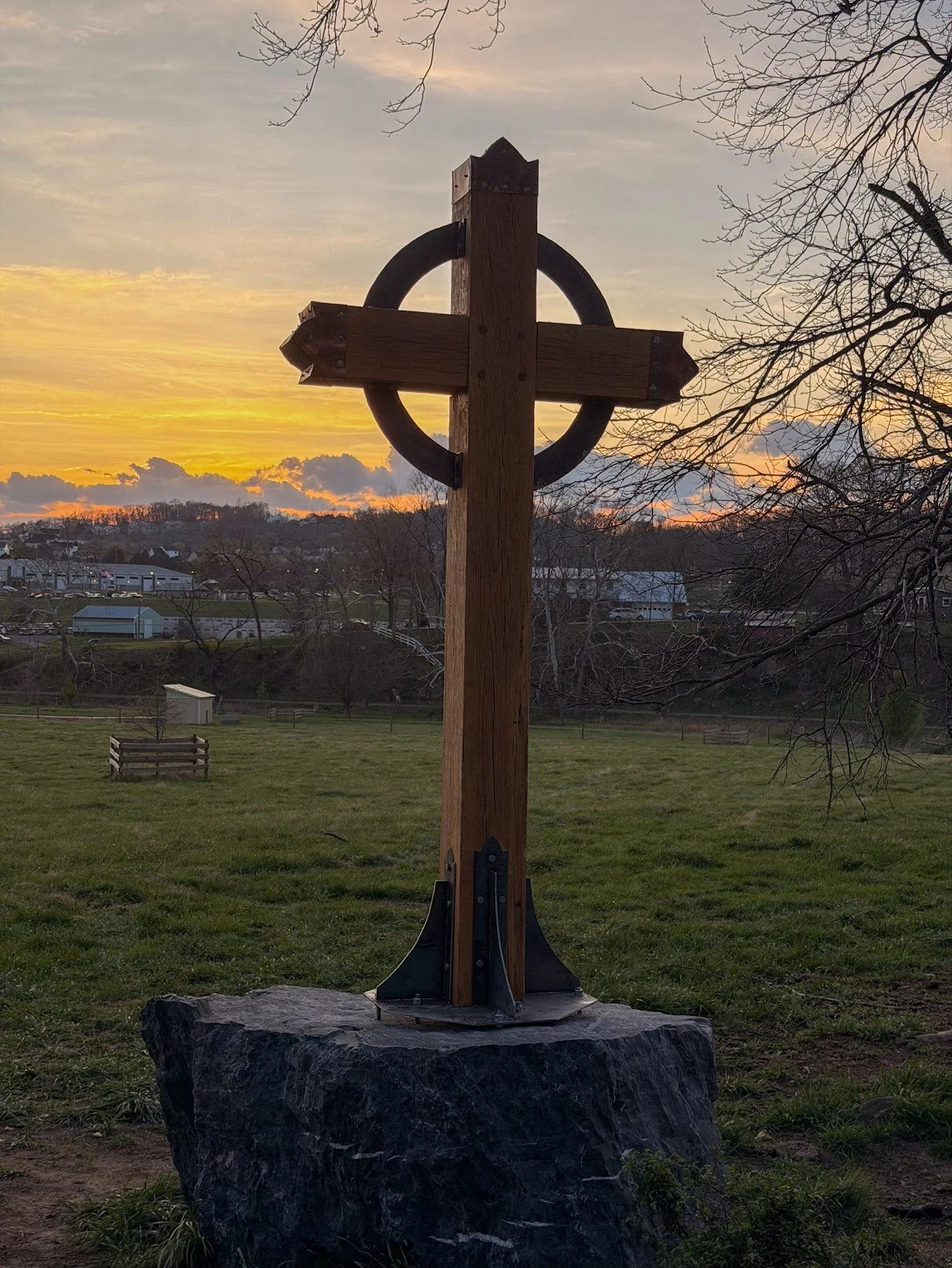
Psalm 37:3 names the work before us. We are not simply building facilities. We are learning to dwell faithfully in the land God has entrusted to this parish.
Since 2021, Church of the Lamb has sought to preserve and restore this plot of land in Rockingham County.
Along the way, we have discovered that God is not only using us to preserve and restore this corner of creation; He is also using the Abbey to preserve and restore us.
The next phase of Abbey life includes necessary infrastructure: water and septic, parking, kitchen and bathrooms, roof, children’s atria, and in time a sanctuary where the parish may abide in worship for generations.
If we do not have water and septic funded and underway by May 2027, we will have to leave the Abbey until we do.
But even now, while that larger work unfolds, the Abbey is already becoming a school of prayer and work.
The land is teaching us patience. The buildings are teaching us dependence. The gardens, hives, pasture, paths, feasts, and workdays are teaching us that restoration is not only something we do to a place; it is something God does in a people.
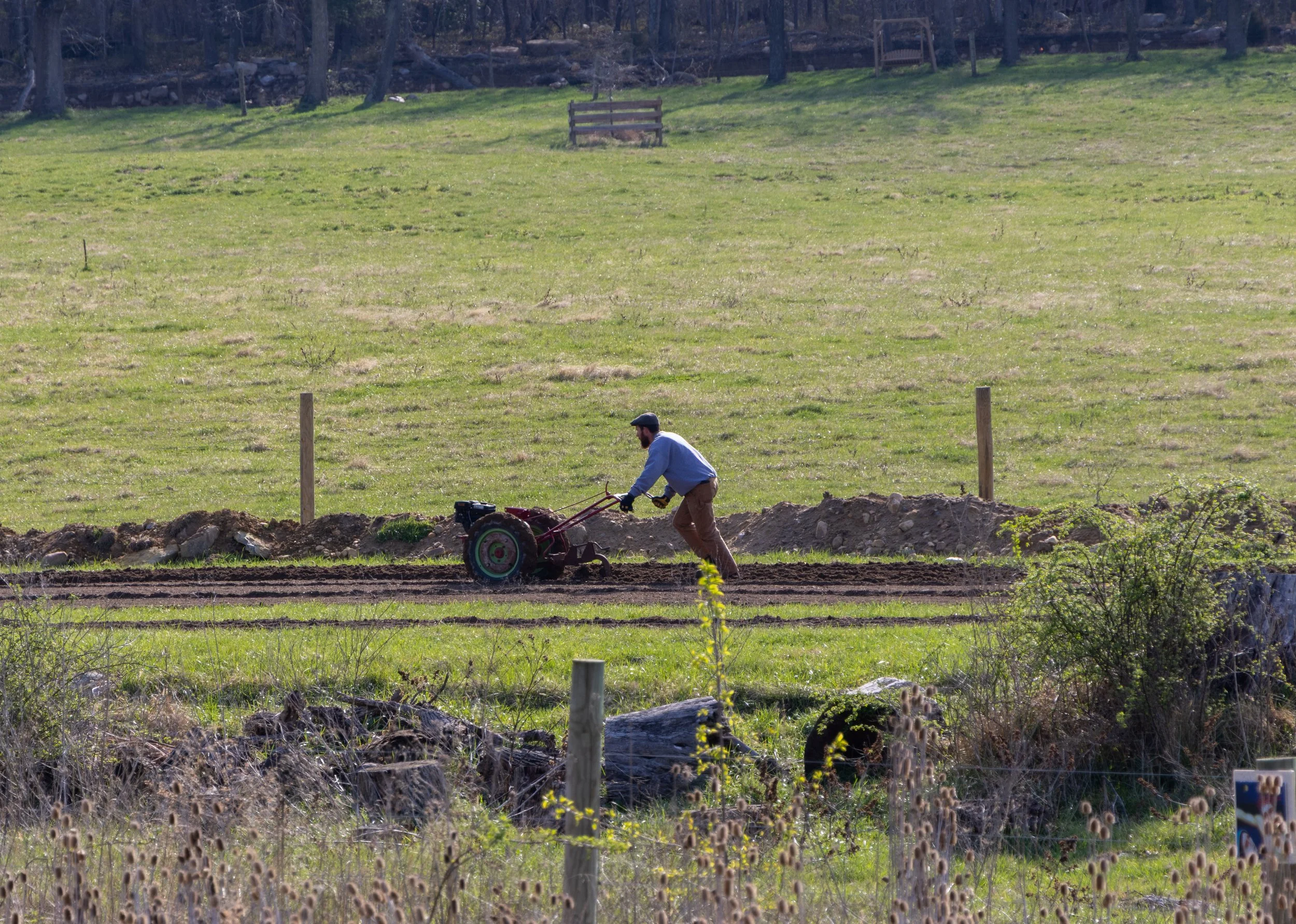
Prayer & WorkAt Rockingham Abbey, prayer and work are not disparate disciplines.
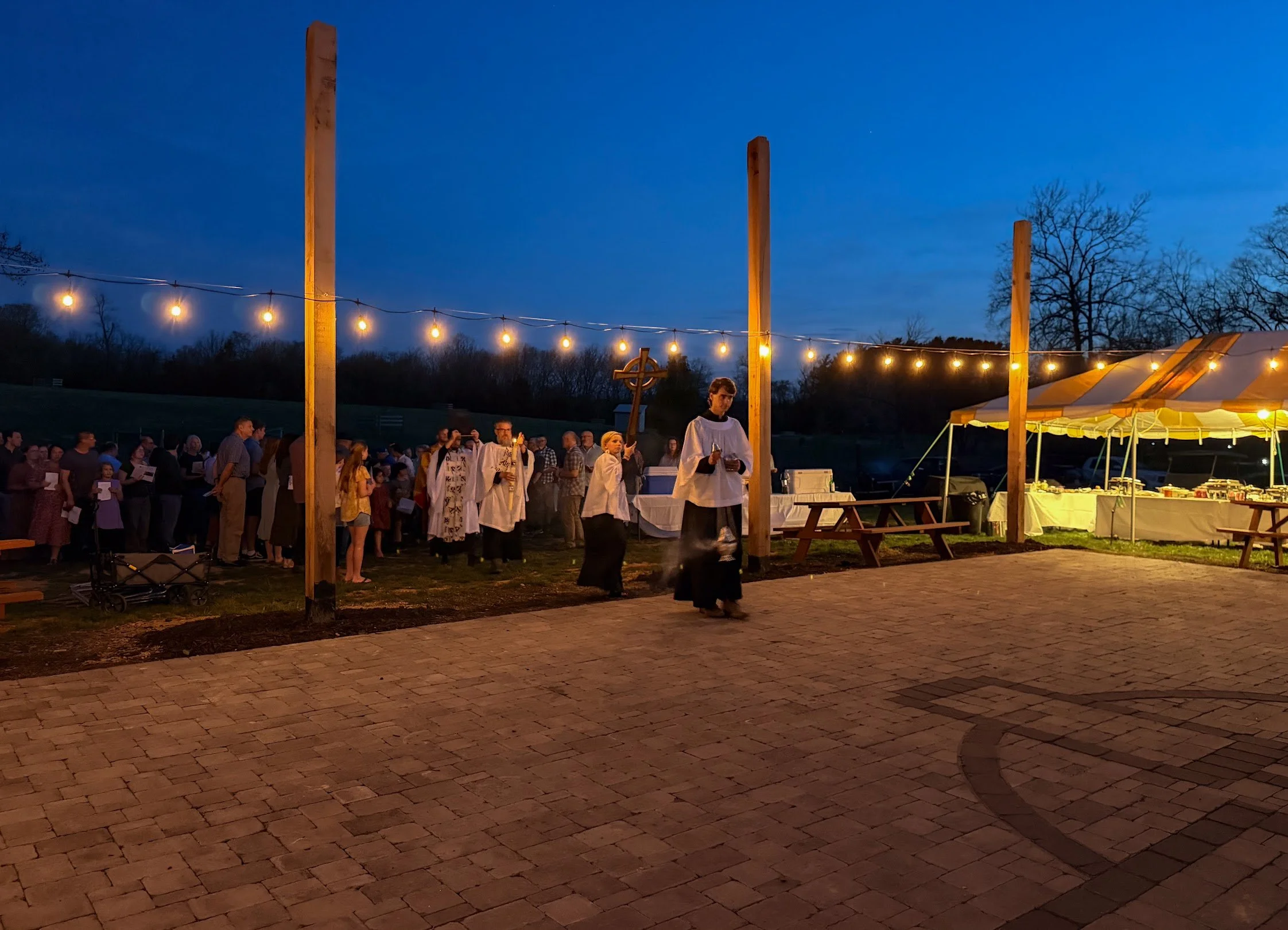
We worship.
We feast.
We tend gardens.
We keep bees.
We plant orchards.
We prepare pasture.
We teach children.
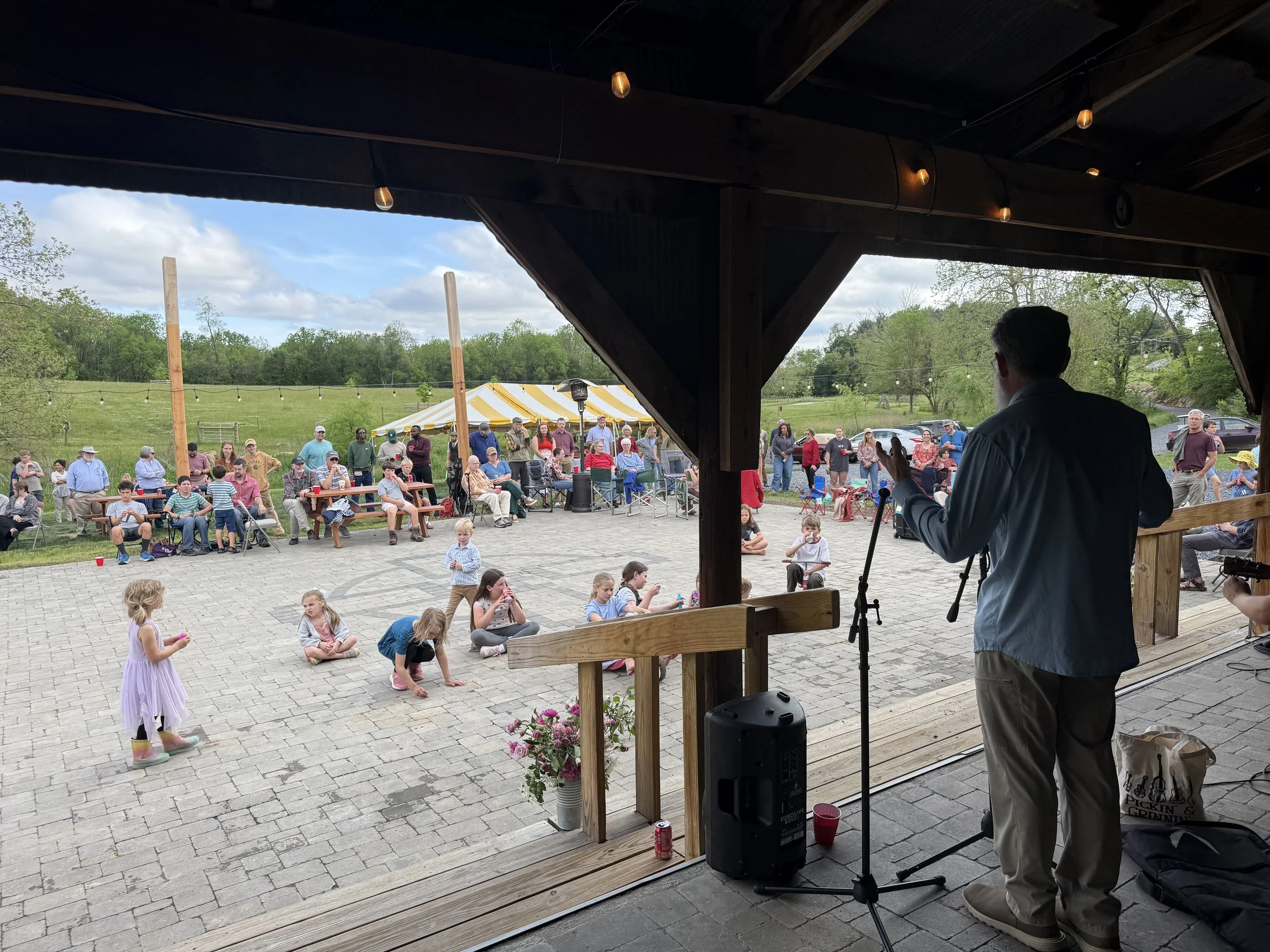
We welcome guests.
We learn to rest.
All of this belongs together. The Abbey is not a place for us to hide away from the world. It is a place where the parish learns how to abide in Christ so that we may be sent in love for the life of the world.
The historic abbey economy was not merely a business model. It was a household of prayer and work: fields, kitchens, workshops, guest houses, books, animals, gardens, feasts, alms, and worship held together under God.
Rockingham Abbey is beginning to recover that pattern. We pray our work may one day bear economic fruit so that we can care and provide for our community, but its first purpose is to form a people who can receive work as gift and offer its fruits in love.
Formation comes before production; provision comes in due season.
Why our community needs an Abbey
Modern life is often hurried, disembodied, noisy, and anxious. We need places where the church learns to become patient again.
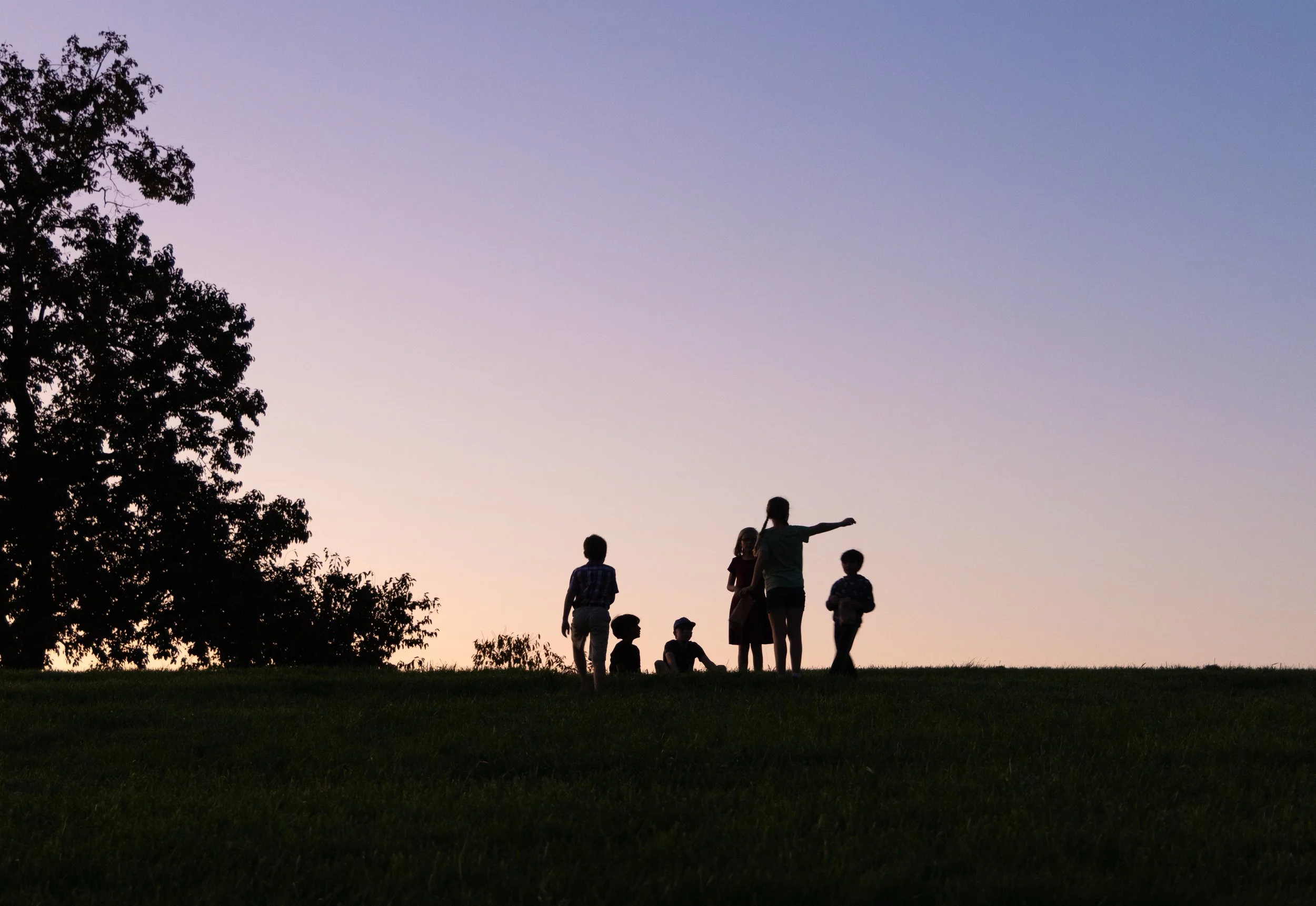
We need places where children see adults pray and work.
We need places where worship forms daily life.
We need places where the land is not merely consumed, but tended.
We need places where beauty is made, food is shared, guests are welcomed, and rest is practiced.
We need places where the church remembers that ordinary things — bread, wine, water, soil, honey, herbs, animals, tables, tools, songs, and silence — can become gifts of God when offered to Him.
Rockingham Abbey is one such place.
We are recovering the abbey idea in Anglican parish form: not to escape the world, but to become more deeply rooted in Christ for the sake of the world.
This is a work of ressourcement and renewal, carried by resurrection hope — a sign that old Christian patterns can live again when they are received with humility, prayer, and love.
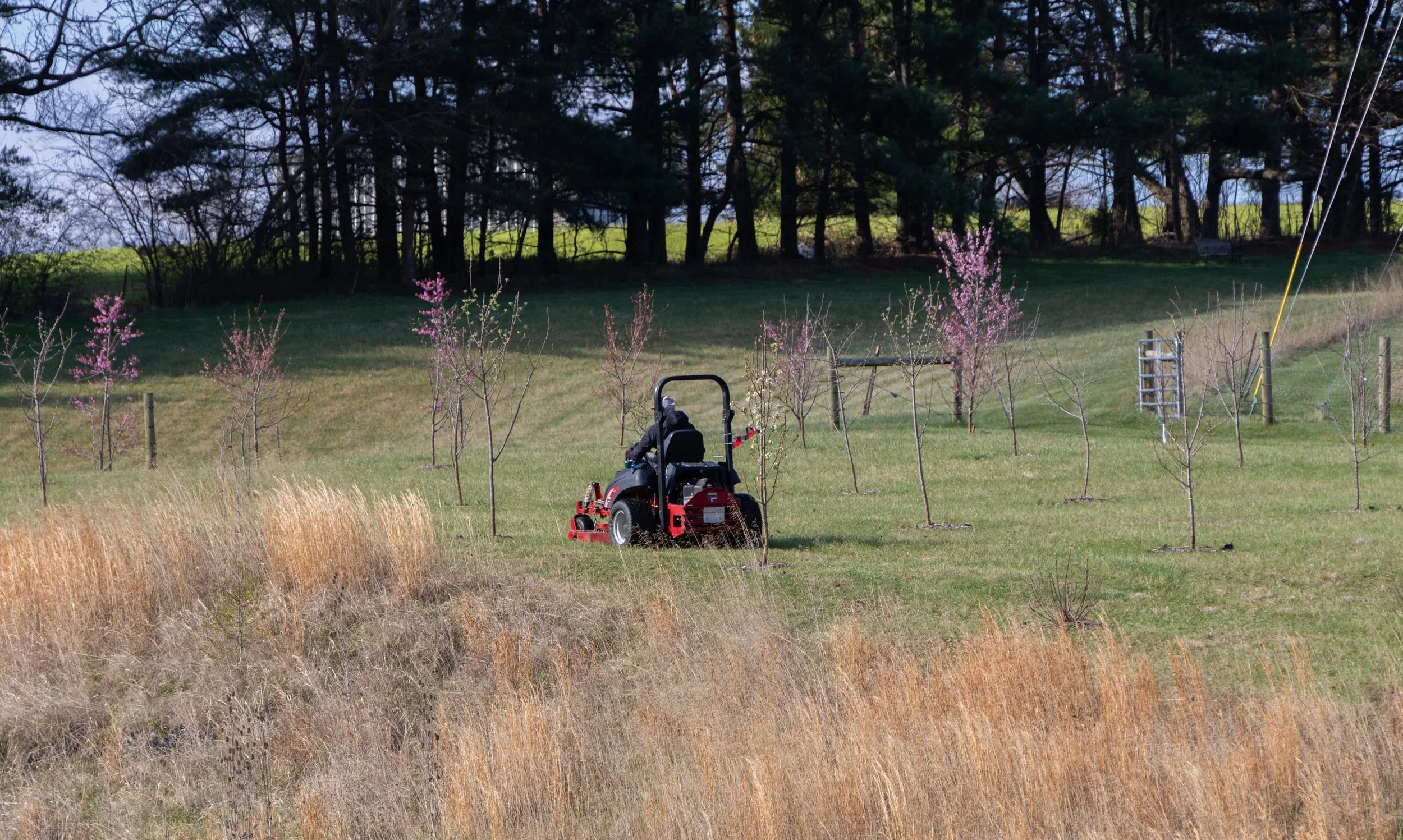
There are many ways to participate in the life of the Abbey.
You can pray.
You can give.
You can bring time, hands, skill, tools, seeds, attention, and patience.
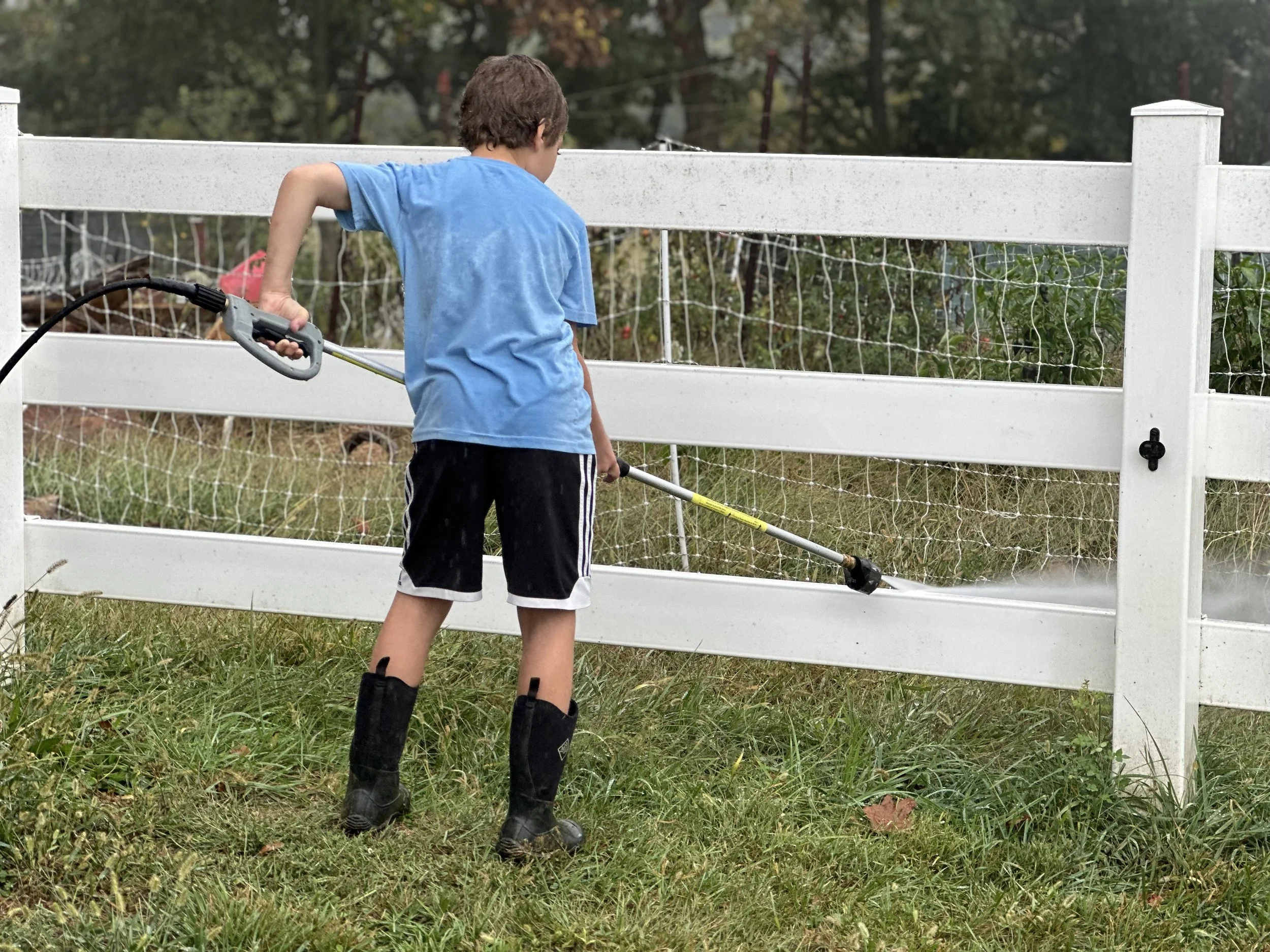
The Abbey is still young. Much of the work is ordinary and slow: planting, weeding, watering, recording, repairing, welcoming, cooking, carrying, teaching children, and learning how to rest.
You can help make this land a place of worship, work, rest, provision, and restoration for generations to come.
Join the Work.
FAQs
-
Abbeys (or monasteries) were communities of Christians who lived together and adopted a common rule of life built around regular liturgical prayer. Between their prayers, they worked to provide for themselves and to subsidize their ministries of mercy. This work took different shapes historically: creating and staffing hospitals, founding schools, hosting scholars-in-residence, growing food, tending animals, brewing beer, providing a social safety net for the materially poor, providing shelter for travelers, copying manuscripts of the Bible and other important works, and archiving cultural treasures.
-
Christians started abbeys to create spaces where they could become of service to the world instead of merely assimilating into pagan empires around them. These alternative spaces at the margins of culture allowed Christians to preserve their beliefs while still serving their communities. In The Celtic Way of Evangelism, George Hunter indicates that Ireland converted to Christianity more swiftly and thoroughly than any other culture in history, in no small measure, because St. Patrick evangelized through the creation of monasteries.
Abbeys still exist today around the world. Locally, a small group of nuns at Our Lady of the Angels Monastery lives in Crozet, prays faithfully, hosts guests in their cottages, and makes cheese.
-
Today we find ourselves in a cultural moment of chaos. Modern life in western cultures is noisy, ruthlessly efficient, consumeristic, devoid of purpose, and disenchanted. Swimming in these waters deforms us.
We need places where we learn how to pray, contemplate, and be with God in silence.
We need to travel beyond mental assent alone and into relationship with the Trinity. Rational faith is good, but it is not enough.
Lastly, we need places for scholars who are no longer welcome in traditional academies, artists whose beautiful creations are not recognized by the art community, and artisans in an era of mass production.
-
At Church of the Lamb, we wish to relearn and embody many characteristics of abbeys in the 21st century. Specifically, we want to integrate our prayer with our work (ora et labora), foster a community that lives a different ethos than our secular neighbors, and protect spaces for silence, contemplation, and rest so that we may hear God. We want to participate in spiritual formation through the use of Catechesis of the Good Shepherd and other devotional aids and to worship sacramentally and liturgically in our sanctuary on the property.
-
Our mission is to abide as disciples of Christ who are invited to rest and compelled to love. In the Bible, abiding in Christ means God's people live in God's place and experience his rule and blessing. We want to embody that model here at Church of the Lamb. Through the sacraments of Baptism and Eucharist, Christ makes us his people, unites us as one family, and feeds us with himself.
Furthermore, he has provided us with a beautiful and productive place to live and worship him. But we must not hoard this blessing to ourselves. We must share it through generous hospitality to neighbors, extending to them the joyful welcome we've received in Christ. Because we are compelled to love out of the rest we have received, we must steward these gifts to labor for renewal: of ourselves, of God's good creation, of our people, and of our community. Working and praying for God's kingdom to come is a large and sprawling endeavor, so we're eager to partner with individuals and organizations pursuing this renewal.